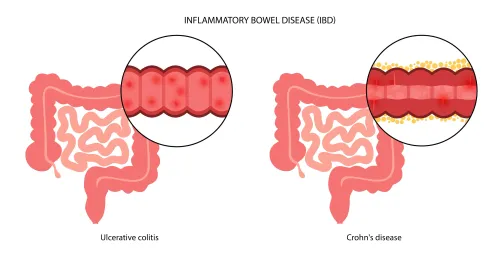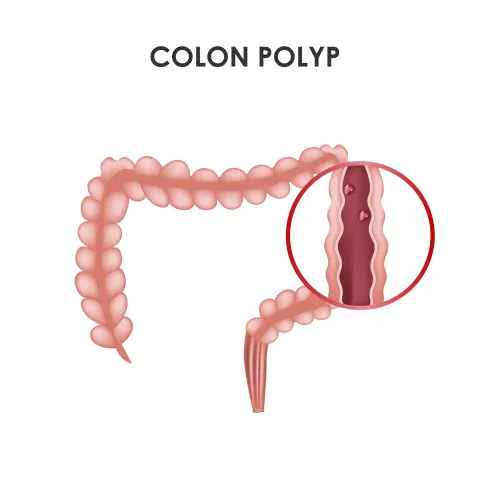
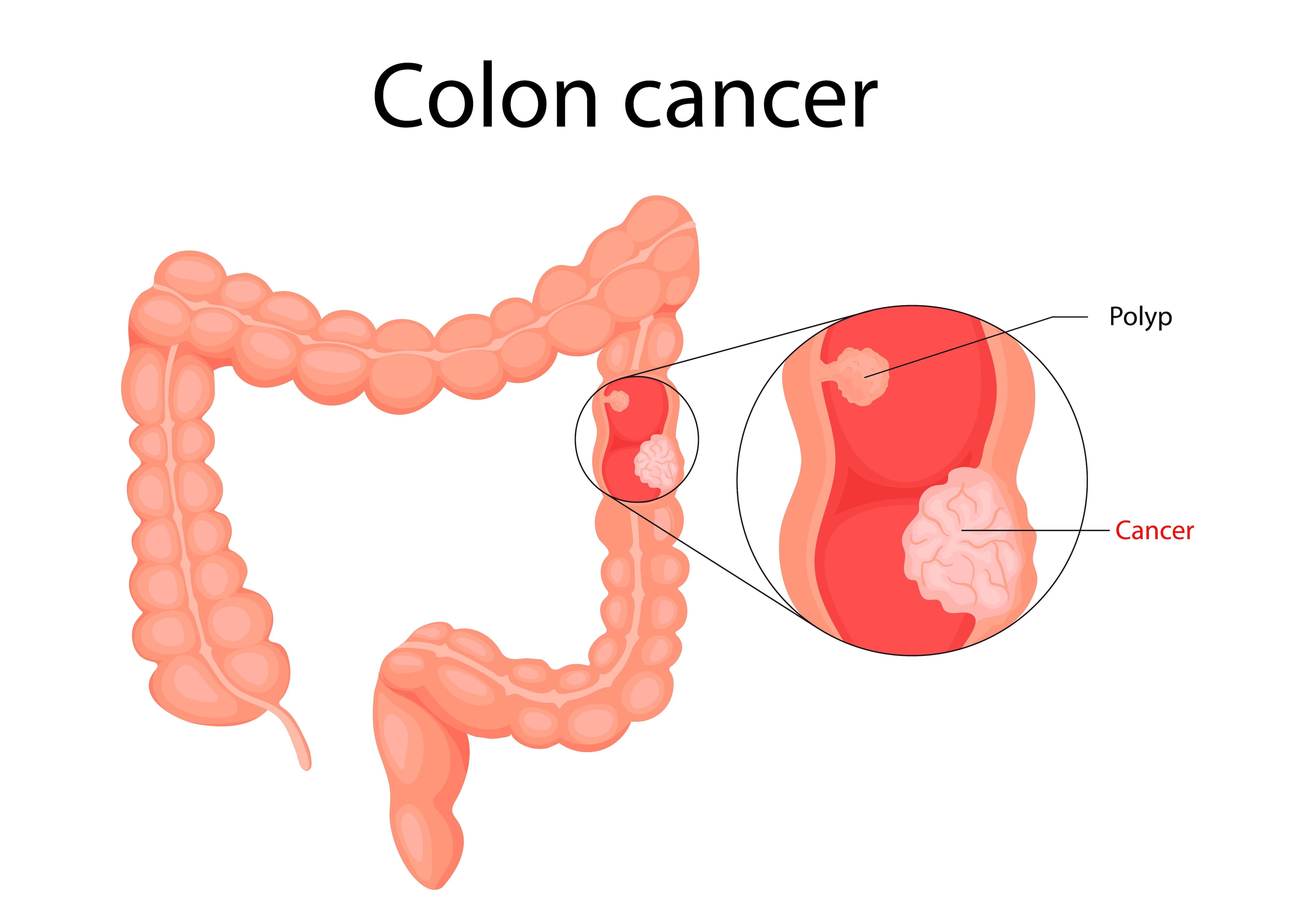
Most average-risk adults should begin colorectal cancer screening at 45, but family history, inherited syndromes, inflammatory bowel disease and previous polyps can change both the starting age and the test. You will be able to identify the appropriate screening pathway, compare the available tests and understand what must happen after a positive or incomplete result.
Key takeaways
- Start average-risk screening at age 45 and continue through age 75.
- Ask about earlier screening for family history, polyps, inflammatory bowel disease, or hereditary syndromes.
- A positive stool or imaging test requires follow-up colonoscopy.
- A negative result lowers risk but does not eliminate the need for repeat screening.
When should average-risk adults start and stop screening?
Adults without symptoms, a personal history of colorectal cancer or high-risk polyps, inflammatory bowel disease involving the colon, or a hereditary syndrome should start screening at age 45. Average-risk colorectal cancer screening continues through age 75, using one of these options:
| Test | Usual interval through age 75 | Key point |
|---|---|---|
| Colonoscopy | Every 10 years after a normal, complete examination | Requires bowel preparation; many polyps can be removed during the procedure |
| FIT | Every year | At-home stool sample; no bowel preparation or sedation |
| gFOBT | Every year | At-home stool sample; dietary and medication instructions may apply |
| Stool DNA-FIT | Every 1 to 3 years | At-home stool sample combining blood and molecular-marker testing |
| CT colonography | Every 5 years | Requires bowel preparation and uses low-dose radiation |
| Flexible sigmoidoscopy | Every 5 years, or every 10 years with annual FIT | Examines the rectum and lower colon |
Screening after age 75 should be an individual decision for adults aged 76 to 85. Discuss your overall health, previous screening history, estimated life expectancy and personal preference; someone who has never been screened may benefit more than someone with consistently normal recent tests. Screening after age 85 is not routinely recommended.
These intervals apply only when you have no warning symptoms. Rectal bleeding, iron-deficiency anaemia, unexplained weight loss, persistent bowel-habit changes or concerning abdominal pain require medical assessment and possible diagnostic testing rather than waiting for a screening date. A first-degree family history or another high-risk condition also requires a different plan.
Who needs an earlier or more intensive screening plan?
A first-degree relative with colorectal cancer or an advanced adenoma means you are not average risk. The concern is greater when that relative was diagnosed before age 60, or when two or more first-degree relatives are affected.
Tell your clinician the relative’s diagnosis age, cancer location and whether the polyp was an advanced adenoma, such as one at least 10 mm or containing high-grade dysplasia.
1. Start colonoscopy at age 40, or 10 years before the youngest affected relative’s diagnosis, whichever comes first. For example, if a parent was diagnosed at 52, begin at 42; if the diagnosis was at 68, begin at 40.
2. Repeat colonoscopy often at about five-year intervals when family history remains significant. The interval changes with the examination quality, number and type of polyps found, and the ages and number of affected relatives.
3. Do not substitute an average-risk schedule when a hereditary syndrome or previous disease is involved. Lynch syndrome screening, familial adenomatous polyposis surveillance, and follow-up for inflammatory bowel disease involving the colon require specialist-designed intervals.
A personal history of colorectal cancer or high-risk polyps also requires surveillance rather than routine consumer screening. Your plan may include colonoscopy more frequently than every five years, genetic counselling, or examinations beginning well before age 45.
Bring pathology reports and relatives’ diagnosis records to the consultation; an uncertain family history can lead to the wrong interval.
How do the available colorectal cancer tests differ?
The main trade-off is convenience versus what happens after an abnormal result. At-home stool tests avoid procedures, while colonoscopy can find and remove many polyps during one examination.
| Test | Sample and preparation | Sedation | Repetition | Polyp removal |
|---|---|---|---|---|
| Colonoscopy | No stool sample; bowel cleansing is required | Usually sedation | The usual colonoscopy screening interval is every 10 years after a complete, adequately prepared normal examination | Yes; many polyps can be removed immediately |
| FIT test | At-home stool sample detecting human blood; no bowel cleansing | None | Every year | No; an abnormal result requires colonoscopy |
| gFOBT | At-home stool sample using a chemical blood reaction; no bowel cleansing | None | Every year | No; an abnormal result requires colonoscopy |
| Stool DNA-FIT | At-home stool sample detecting blood and selected molecular markers; no bowel cleansing | None | The stool DNA-FIT test interval is generally every one to three years | No; a positive result requires colonoscopy |
| CT colonography | Bowel cleansing and gas inflation of the colon are required | Usually none | Generally every five years | No; abnormal findings usually require colonoscopy |
| Flexible sigmoidoscopy | Examines the rectum and lower colon; bowel preparation is required | Often none, though sedation can be arranged | Every five years, or every 10 years with annual FIT | Some polyps within the examined area can be removed |
CT colonography uses low-dose radiation and can miss lesions outside its imaging limits. Flexible sigmoidoscopy also does not examine the proximal colon, while colonoscopy views the entire colon. A negative stool or imaging test does not provide the same protection as direct examination with polyp removal.
What does a positive or negative screening result mean?
A positive FIT, gFOBT or stool DNA-FIT is not a cancer diagnosis. It means blood or molecular changes were detected, and repeating the stool test does not resolve the result. A positive FIT follow-up colonoscopy is needed to find and remove polyps or identify another source of bleeding.
The same follow-up principle applies after an abnormal CT colonography or flexible sigmoidoscopy. These tests can show a suspicious lesion, but colonoscopy is usually needed to examine it directly, take a biopsy or remove a polyp.
A negative colorectal cancer screening test lowers risk for the period covered by that test’s schedule; it does not rule out every cancer or polyp. Repeat testing keeps screening active:
- FIT and gFOBT: every year.
- Stool DNA-FIT: every one to three years, depending on the test and guideline.
- CT colonography: every five years.
- Flexible sigmoidoscopy: every five years, or every five years with annual FIT.
- Colonoscopy: every 10 years when the examination is complete, the bowel preparation is adequate and no finding requires an earlier interval.
That 10-year interval does not apply automatically. An incomplete examination, inadequate bowel preparation or failure to reach the cecum can hide lesions and require an earlier repeat. Confirm that the cecum was reached during colonoscopy and that the preparation and findings were documented before treating a normal result as a full-interval result.
How should you choose a screening test and arrange follow-up?
Choose a colorectal cancer screening test you can complete at its required interval, then confirm what happens after an abnormal result.
Annual FIT is useful only if you can collect a stool sample correctly each year; CT colonography is suitable only if you can manage bowel preparation and complete a follow-up colonoscopy when it finds a polyp or suspicious area.
| Option | Practical demand | What happens after an abnormal result |
|---|---|---|
| Stool tests | Collect a sample at home; no bowel preparation or sedation. FIT is annual; stool DNA-FIT is repeated every 1–3 years. | Arrange a diagnostic colonoscopy; repeating the stool test does not resolve the result. |
| CT colonography | Bowel preparation is required; the scan uses low-dose radiation and is usually repeated every 5 years. | Arrange colonoscopy to remove or assess an abnormality. |
| Colonoscopy | More preparation and procedural care, but one examination can detect and remove many polyps. | Follow the interval based on the findings and examination quality. |
Ask specifically about screening test follow-up before choosing. Stool tests and CT colonography do not remove polyps or establish the source of bleeding, so their intended benefit depends on completing colonoscopy when indicated. A negative result also does not eliminate the need to repeat testing on schedule.
A gastroenterology consultation is useful before choosing a schedule if you have inflammatory bowel disease, a personal history of colorectal cancer or high-risk polyps, or affected close relatives. Seek one after any positive result or when symptoms require diagnostic testing. Dr. Harshad Joshi can help assess risk, select an appropriate test and coordinate endoscopic follow-up.
Related service
Endoscopy Colonoscopy ₹12000 • Used for examination of the inner lining of the LARGE INTESTINES (COLON) • BOWEL PREPARATION: dietary restrictions and bowel cleansing is done to... |
Frequently asked questions
When should average-risk adults start and stop colorectal cancer screening?
Adults at average risk should start screening at age 45 and continue through age 75. Screening after age 75 depends on overall health, previous screening, and a clinician’s advice.
Who needs earlier or more intensive colorectal cancer screening?
People with a first-degree relative who had colorectal cancer or advanced polyps, a personal history of colorectal cancer or high-risk polyps, inflammatory bowel disease involving the colon, or a hereditary syndrome need an individualised plan.
How do colorectal cancer screening tests differ?
Stool tests look for hidden blood or abnormal DNA, while colonoscopy and flexible sigmoidoscopy examine the bowel directly. CT colonography uses imaging. Tests differ in preparation, frequency, sedation, risks, and whether polyps can be removed during the test.
What does a positive colorectal cancer screening result mean?
A positive stool, CT colonography, or other non-colonoscopy result does not diagnose cancer. Arrange a follow-up colonoscopy to identify the cause and remove or biopsy suspicious growths.
What does a negative colorectal cancer screening result mean?
A negative result means the test found no abnormality at that time. Repeat screening at the recommended interval because no screening test detects every cancer or polyp.